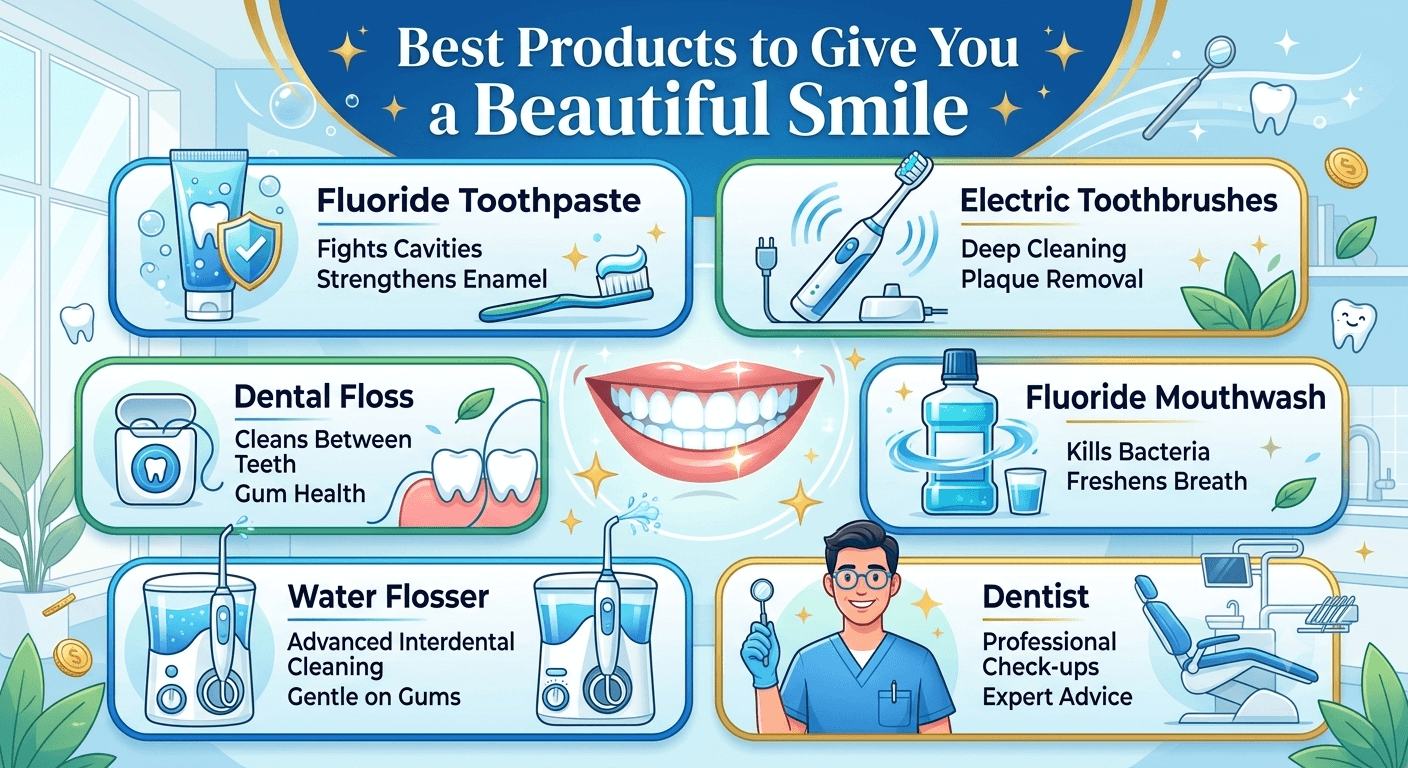
While genetics play a role in the color and shape of your teeth, the things you use every day can make a significant difference in keeping your smile healthy and bright. From toothbrushes and whitening products to floss and mouthwash, choosing the right oral care essentials can help prevent cavities, reduce plaque, freshen breath, and maintain healthy gums.
Before discussing products that can help your smile, it's important to note things that can hurt your smile regardless of the products you use:
Smoking
Acidic drinks
Sugary foods, especially ones that get stuck between your teeth like gummy candies
Chewing ice
Below are some of the best types of products to include in your daily oral care routine.
1. Electric Toothbrush
An electric toothbrush is one of the best investments you can make for your smile. Compared to manual brushing, many electric toothbrushes make it easier to remove plaque, especially along the gumline and between teeth. Features such as built-in timers, pressure sensors, and multiple cleaning modes reinforce good brushing habits.
Dentists usually recommend brushing for two minutes, twice each day using a soft-bristled brush. Replacing the brush head on an electric toothbrush every three months - or sooner if the bristles become damaged or worn - helps maintain effective cleaning.
2. Fluoride Toothpaste
A fluoride toothpaste is a great way to protect your teeth. Fluoride strengthens tooth enamel, helps prevent cavities, and can even reverse very early stages of tooth decay before a cavity develops.
People with sensitive teeth may benefit from specially formulated toothpastes that help reduce discomfort caused by hot, cold, or sweet foods.
Questions answered and ready to buy?
3. A Water Flosser and Traditional Dental Floss
Water flossers have become increasingly popular, especially for people with braces, dental implants, bridges, or periodontal pockets. Water flossers use a gentle stream of water to remove food particles and plaque from in-between teeth and other hard-to-reach areas.
Traditional dental floss can be used along with a water flosser. Dental floss is basically a thin string that reaches the tight spaces between teeth where plaque and food particles often collect. Dental floss may be waxed, fluorinated, or both. There is also a flat variety known as dental tape. Some flosses may be flavored (e.g., mint).
Daily flossing helps prevent cavities between teeth, reduces gum inflammation, and lowers the risk of gum disease.
A Reputation Based on Trust
We do our best to provide you the best experience ever
Very affordable plans and a wide range to choose from to fit your budget...
Belle Chase, LA
Thank you for a pleasant experience
I got signed up for Dental Insurance and your Representative made it very easy...
Grantville, GA
4. Teeth Whitening Products
If your goal is a brighter smile, whitening toothpastes can help remove many surface stains caused by coffee, tea, red wine, and tobacco. However, whitening products are generally most effective on external stains and may not dramatically change your natural tooth color.
If you're looking to brighten your smile, there are several safe and effective whitening options available.
Whitening strips remain one of the most popular at-home choices because they're easy to use and can noticeably reduce stains over time.
Whitening gels, pens, and LED whitening kits also provide convenient options for many people.
For faster or more dramatic results, professional whitening treatments performed by a dentist generally provide the greatest improvement while minimizing the risk of tooth sensitivity.
Before beginning any whitening treatment, it's a good idea to discuss the idea with your dentist, especially if you have crowns, veneers, fillings, or sensitive teeth. For more information on teeth whitening, see our article What's the Best Way to Whiten My Teeth.
5. Sugar-Free Gum
Old-fashioned gums had sugar, which isn't great for your teeth. Sugar-free gums, however, began entering the market around the 1950s. Chewing sugar-free gum after meals can benefit your smile in several ways. It stimulates saliva production, which naturally helps wash away food particles, neutralize acids, and protect tooth enamel.
Many dentists recommend gum sweetened with xylitol because it may help reduce cavity-causing bacteria when used as part of a complete oral hygiene routine.
6. Don't Forget Regular Dental Visits
Even the best oral care products for your smile cannot replace professional dental care. Routine dental examinations and cleanings allow your dentist to remove hardened plaque, detect problems early, and provide personalized recommendations for maintaining your smile.
Combining good home care products with regular dentist visits gives you the best opportunity to enjoy a healthy smile for years to come.
Need some help choosing a dental plan?
Our agents can:
Answer your questions
Confirm if your dentist is in-network
Enroll you over the phone
800-296-3800
A Beautiful Smile Starts with Healthy Habits
No single product can create the perfect smile overnight. Instead, lasting oral health comes from consistent daily habits, quality dental care products, a healthy diet, and regular visits to your dentist.
By choosing products that support healthy teeth and gums - and using them consistently - you can reduce your risk of dental problems while keeping your smile looking its best. Whether your goal is fresher breath, whiter teeth, healthier gums, or greater confidence, investing in the right oral care products is an investment in your long-term health and well-being.
Get a Quote
Enter your information to see available plans in your area
Need help choosing a plan?
Call us at 800-296-3800
Our knowledgeable customer service team will assist you with any questions you may have
prior to enrolling in a dental plan. They can guide you through the process of choosing
coverage that matches your needs as well as your budget.