You are here : Blog Home


Minimize

New Methods for Detecting Oral Cancer

May 18

Written by:
5/18/2012  RssIcon

Mention the word ‘cancer’ and most people shudder.  A common human response, we try to bury our heads in the sand or wish the concept away unless we actually have to deal with a diagnosis personally.  But many cancers are curable when detected early – and oral cancer is no exception. Detecting oral cancer symptoms early can be instrumental in treatment.

Often beginning as a small white or red spot or sore – known as leukoplakia - anywhere in the mouth, oral cancer symptoms don’t necessarily require oral surgery to be detected.  Most regular dental checkups include a visual and palpating check for early signs of oral cancer.  If cancerous, these cells can spread to neighboring healthy tissues and grow into a tumor.  Later stages of oral cancer can then take hold in lymph nodes, bone, muscle, or other organs.  Left untreated, oral cancer can cause disfigurement and even death.

Other potential  oral cancer symptoms include:

  • Changes in the way your teeth fit together
  • Oral sores that bleed easily or don’t heal
  • Lumps, thickening, rough spots, crusty areas or eroded areas in the mouth
  • Difficulty swallowing, chewing, speaking or moving the jaw or tongue.

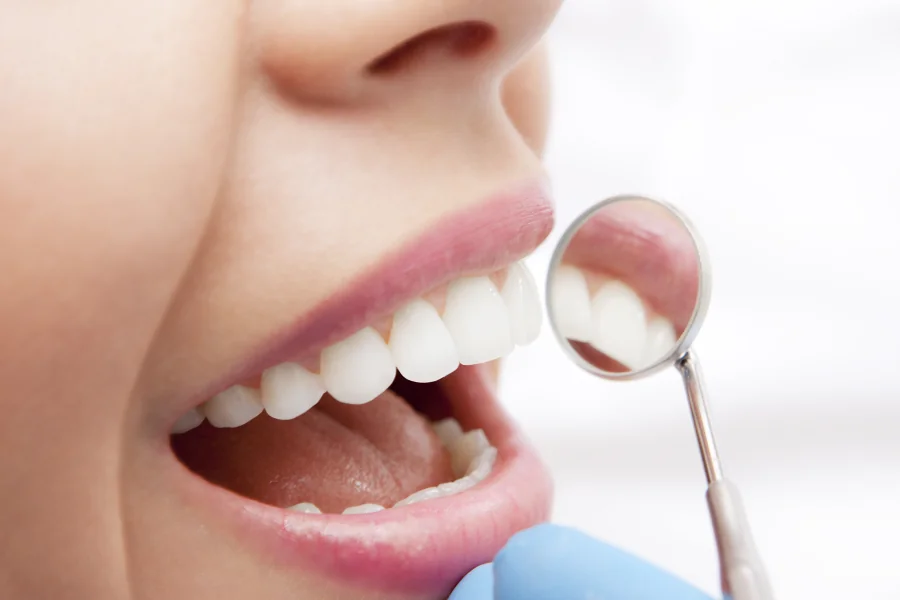
Maintaining regular dental visits is the first and best defense against oral cancer.  Your dentist is trained to detect oral cancer in its earliest stages and can test further for suspicious growths or conditions.  Should something appear abnormal, a simple brush test, which collects suspect cells for further analysis in a lab.  Oral surgery may be necessary to biopsy the area later.

Other tests, such as a white light test and multi-spectral light test may be used on patients pre-disposed to cancers or at risk for oral cancer.  Referral to a pathologist may be recommended for an accurate assessment.

Should an oral cancer diagnosis result from your tests, oral surgery will likely be a necessity.  Oral surgeries for oral cancer can include removal of the tumor and surrounding tissues, removal of all or part of the jaw, lymph node removal in the neck, removal of bone in the roof of the mouth, tracheotomy, tooth removal, and plastic surgery to restore removed tissue.

In addition to oral surgery, radiation therapy or chemotherapy may be ordered to shrink tumors or increase the effectiveness of the other procedures.

The best methods of prevention of oral cancer begin with not using tobacco and alcohol.  Visit your dentist regularly to ensure proper examination and catch oral cancer as soon as possible.  More than half of all patients diagnosed with oral cancer are already experiencing its spread to other parts of the body, complicating recovery. 

Avoiding that spread is as simple as showing up for a checkup.


Your name:
Gravatar Preview
Your email:
(Optional) Email used only to show Gravatar.
Your website:
Title:
Comment:
Security Code
CAPTCHA image
Enter the code shown above in the box below
Add Comment   Cancel 

Search


Minimize